Showing posts with label style dictionary. Show all posts

Wednesday, June 20, 2012

Balancing Fabrics/Close Ups of Men in Suits


After two posts discussing the virtues of balance as a style term, by now I hope you’re getting the gist of it. You know, mixing the highs and lows of a style aspect. If you still can't nail it, just buy a Snuggie and never leave the house, 'cause buddy chances are you've got bigger problems than I can help you with. 


We’ve already discussed formality and pattern, so now we’ll move to fabric. Fabric is basically the type of cloth you're wearing. There are many kinds of fabrics to choose from, each offering a different look and feel. Oddly enough though, these many variants are (supposedly) comprised of five fabric types- cotton, linen, silk, wool, and worsted.


Cotton and linen are fabrics. Knit is a type of weave. Picture from Bloomberg


Silk- apparently what Santa's pajamas are made of

Wool

Worsted


Generally your fabric choice is influenced by the climate. Heavier fabrics fare better in the winter to keep you warm, while lighter, more breathable fabrics are optimal for the summer. Clearly.


Nevertheless, you can add some visual interest to your outfit by playing with various fabrics. The balancing idea here is to play something smooth (like a silk tie) against something textured (like a tweed vest or flannel suit). If you're not up for getting too technical, just go with your instinct of the piece's feel. This really isn't that complicated.


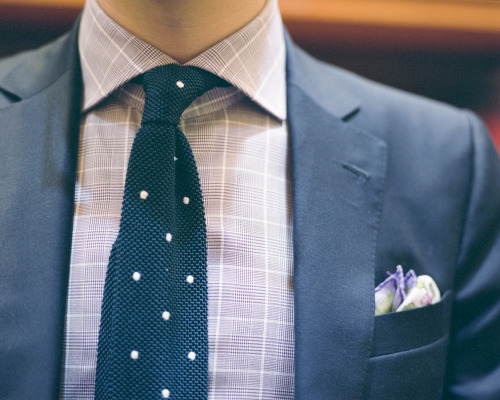
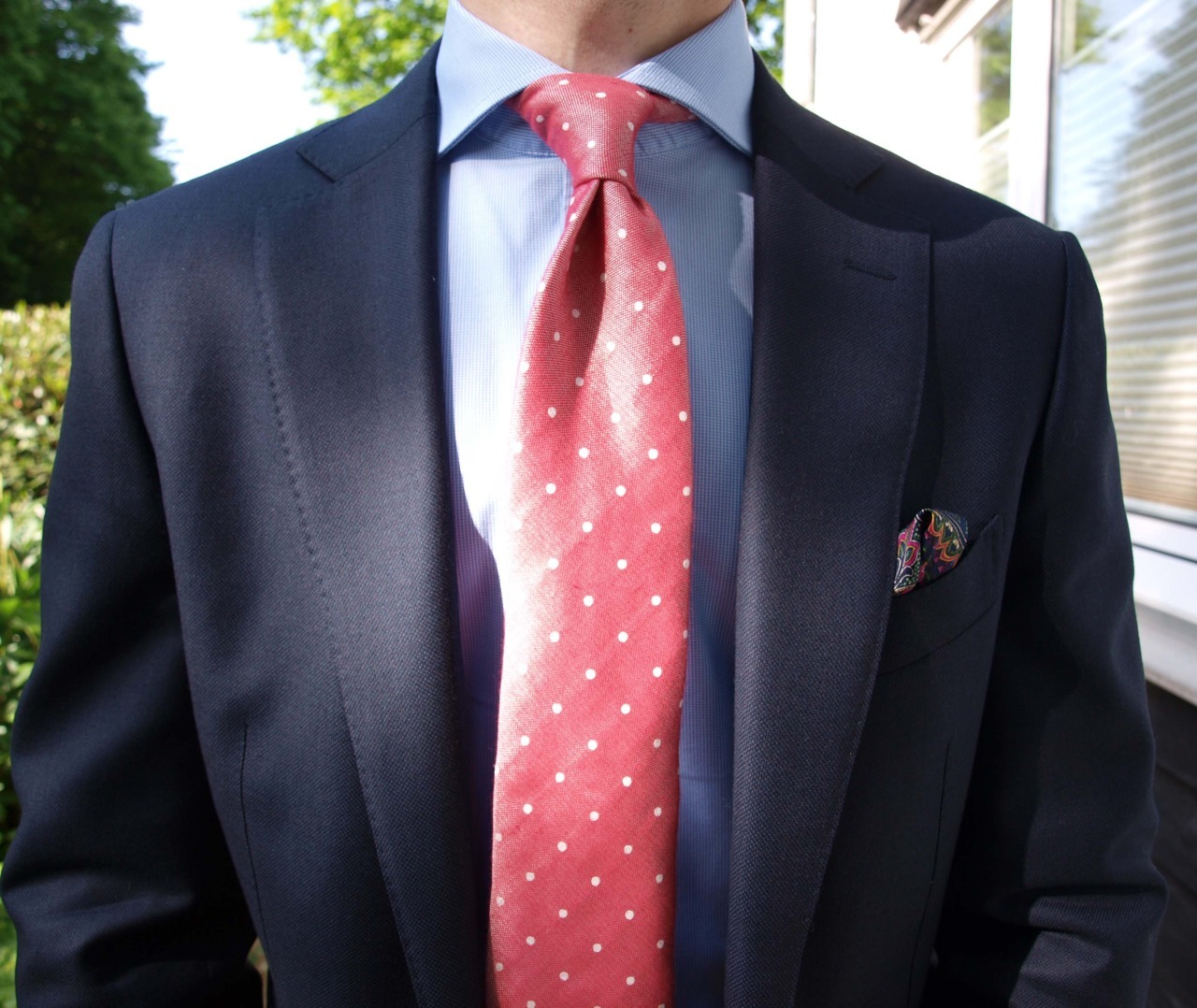
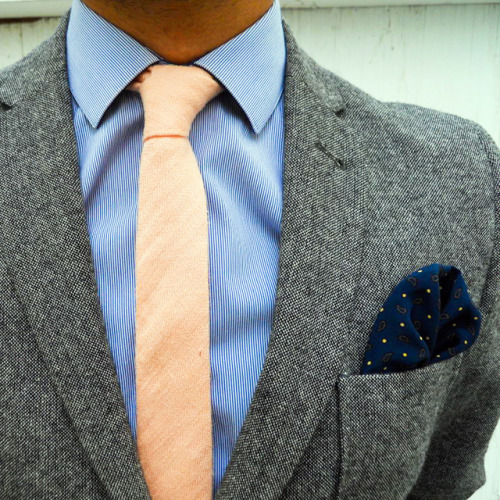
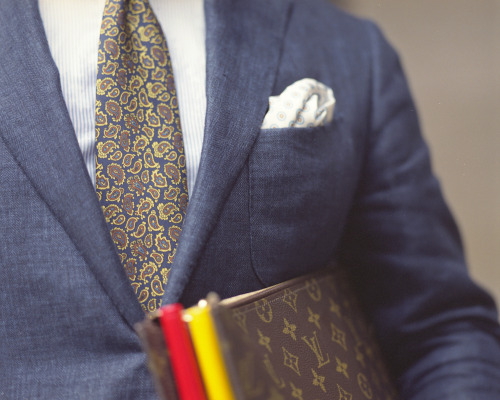
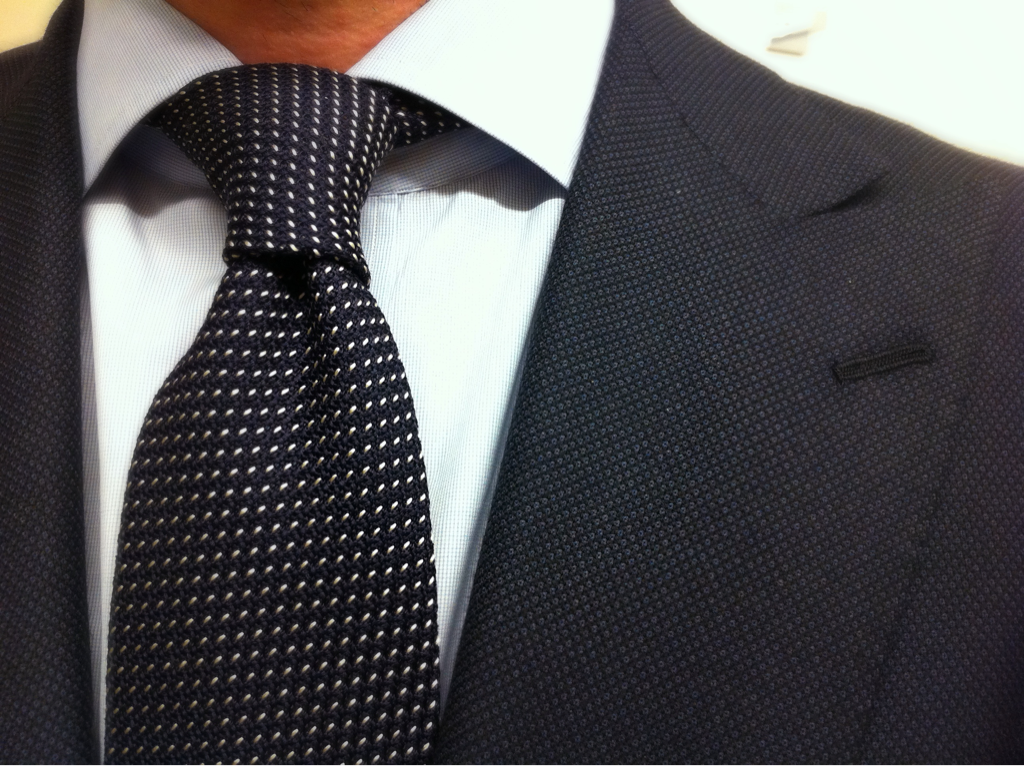
Fabric is an easier style aspect to play around with because of its subtlety. Most people wear cotton shirts, wool suits, and silk ties, so the masses have set the bar pretty low. Play around with some stuff, and don't be afraid to branch out and experiment with different fabrics next time you're in a store. Check out these looks below (I've tried to make them big so you can notice the difference in fabrics between the shirt, tie, suit, and pocket square):


Source


Source


Source


Source- plus the pocket square and shirt tie together nicely in the light and dark blues


Source- this is a more standard ensemble

Source- this outfit is heavy on textured fabrics

This list gives simple definitions for the many types of fabrics and cloths that are out there. Your best chance at fully understanding different types of fabrics is to get out there and play around with them. This rule does not apply to women.


Thanks for reading, and hope the pictures serve as good inspiration,


MD


Friday, June 15, 2012

Balancing Patterns

Last week I (hopefully) defined balance as a style term. It’s about taking the highs and lows of a style aspect and combining them to create an effective look that works right down the middle. Also last week, I couched the definition in terms of formality, like how you can “dress down the middle” by wearing a blazer with jeans. This week, I’ll attempt the same explanation, but in terms of pattern. 
Pattern, as I define it, is the repeated decorative design on a piece of clothing. You can have stripes, gingham, plaid, tye-dye (though hopefully not), or nothing at all. Walk into any menswear store and you’ll see dozens of products in varying patterns. 

gingham- a checked pattern, typically with white and a bold color. From J.Crew

plaid- a checkered, tartan pattern. From Gant Rugger

stripes- long, narrow bands of the same width. From Brooks Brothers

and of course, your plain colors. From Lands' End

Mixing and matching patterns is really a game played at the office. Casual outfits rarely encounter pattern problems, because typically the pants, be they jeans, shorts, chinos, or whatever, are found in a plain color. Finding the right shirt/tie combo however, is more likely to cause problems. 


…..except that it really won’t, as long as you strive to achieve balance of some sort. Check out these shirt/tie combos from a J.Crew ad. Notice how a patterned shirt is paired with a plain or solid tie, while a plain shirt is paired with a patterned tie. Mix subtle and bold patterns to strike a balance.  Not too hard, right? 

You can even mix and match the same patterns, as long as they're in different, corresponding sizes. The stripes on the shirt should be much smaller than those on the tie (although I'm not particularly fond of this look, that's not to say it can't be done). 


via Bloomberg Businessweek


As style novices, this should be enough to build some basic ideas around, so we'll stick with this for now. Once you get this down, you can start experimenting more by mixing patterns. For example, one of my favorite shirt/tie combos is a very soft, pink gingham shirt paired with a dark, evergreen plaid tie. 

Not the best picture, but you get the idea. Elements of pink in the tie help tie the two things together

Thanks for reading, and look out next week for more,
MD

Monday, June 11, 2012

Style Dictionary: Versatility


Like learning anything new, the process of acquiring style takes time. You have to learn multiple basics before putting them all together, like how a stripper learns how to work the pole before being able to really “Wow” you with a dance. Not that I’d know.
After last week’s post, I figured thought that I probably lost some people with my confusing rhetoric. In the past, I’ve talked a lot about balance, but also about versatility, without really establishing what I mean by these terms. So today I’m going to help clear the air and hopefully explain things more fully.
Versatility is a piece’s ability to adapt to many different functions, activities, settings, or outfits.


How do versatility and balance interrelate?
They do, in a sense, which I’d be more than willing to delve into in the comments below or a personal email. But for the sake of clarity, and since we’re all style beginners here at Midwest-Dressed, the simple answer is: they don’t. Balance is something you consider when you’re standing in front of your closet at 7 am (or in my case, noon), trying to decide what to wear for the day.
Versatility, on the other hand, is something you’re more likely to consider when you’re in a store, acquiring something new.


The idea is that, when you’re considering what to buy or whether to pull the trigger on something, will you actually wear it? Can you style it differently, can you wear it with several things you already own, or does it only really work well with your one pair of moss-green trousers that you never wear that often? 
If a piece isn’t versatile, if it can’t be mixed and matched and thrown on with whatever you’ve already got, chances are, you won’t wear it that much, and it’ll sit in the back of your closet where you’ll slowly resent it and yourself for spending the money on it. 
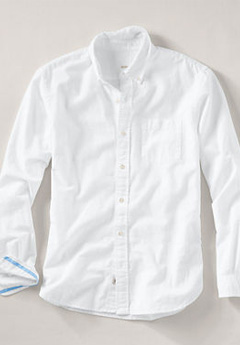
A white OCBD is versatile. You can throw on a tie and wear it to the office, throw on a blazer and wear it to a wine-tasting (if you frequent those sorts of things), or you can roll up the sleeves and wear it to a baseball game. It goes everywhere, does everything. A neon, yellow Brazil soccer jersey? Chances are you’ll only really be wearing it to theme parties or the rare Brazil soccer game (excuse me, soccer match). 
Simply put, when you’re buying new clothes, take the time to really consider how it fits into your wardrobe. It might seem girly to ask, “What will I wear this with?” But if the answer is nothing, put it back on the shelf and save the money for booze, because you know you’ll always drink that. 
Thanks for reading,
MD